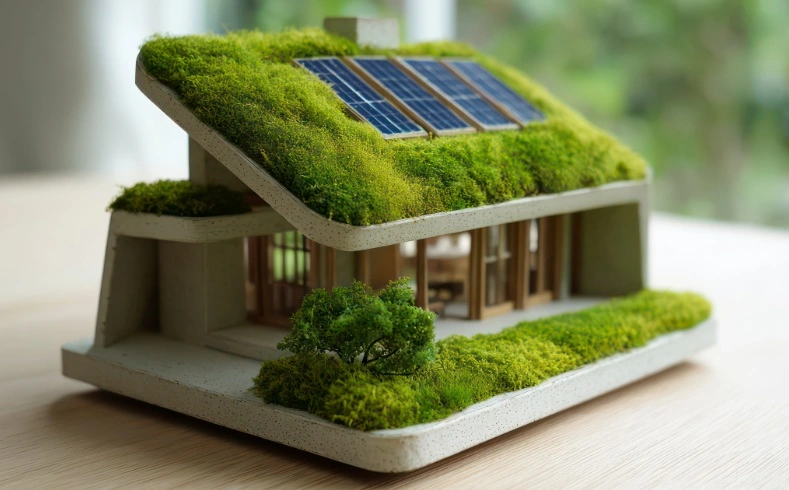
How green roofs can make solar panels more efficient - and why that matters for UK cities
As the UK pushes harder towards net zero, building owners, planners and sustainability professionals are increasingly seeking solutions that deliver multiple environmental benefits from the same investment.
One such innovation gaining attention is the combination of green roofs and solar photovoltaic (PV) systems, sometimes referred to as biosolar or solar green roofs.
While the UK is slowly starting to raise its game in climate-resilience, the rest of the world has been forging ahead, providing evidence to support the integration of these technologies.
A recent Australian study showed that placing a green roof beneath a solar installation can measurably improve overall performance, while also reducing carbon emissions, boosting biodiversity and improving stormwater management. But how strong is the evidence and could this concept work in the UK too?
What the Australian biosolar study found

Researchers from the University of Technology Sydney conducted an eight-month comparison between:
- A standard rooftop solar installation, and
- A rooftop solar system combined with a living green roof layer.
- Solar output improved by ~3.6% – the green roof system generated an extra 9.5 MWh of electricity over the study period.
- Carbon benefits equivalent to planting 110 trees – 8.8 tonnes of additional CO₂e were removed compared to the conventional roof.
- Surface temperatures dropped by up to 20°C in summer conditions, indicating a cooling effect that could help reduce urban heat island impacts.
- Biodiversity flourished, with a seven-fold increase in insects and a four-fold increase in birds on the green roof.
- Stormwater runoff was dramatically reduced, easing pressure on drains during heavy rainfall events.
Is there broader research to back this up?
The Australian results align with a growing body of international research showing that green roofs paired with solar panels can produce real benefits:
Improved solar panel performance
Multiple scientific studies report that green roof systems can increase PV efficiency by several percent:
A review of global research found that solar panels installed over green roofs often produce between 0.5% and 6% more power than those over traditional roofs, largely due to cooler local conditions under and around the panels.
A study in Amsterdam reported about 4.4% increased energy output for panels above a blue-green roof compared to a conventional roof.
Simulation research in Singapore showed green roofs can reduce PV operating temperatures and boost power generation efficiency on average by ~1.6%.
These increases may seem modest, but every percentage point of uplift can translate to significant additional clean energy over the lifetime of a solar installation
Cooling and urban heat island mitigation
Green roofs are well-recognised for their cooling potential.
Recent global modelling shows vegetated roofs can lower urban surface temperatures by about 0.6-1.6°C during the day and reduce temperature swings at night.
Lower rooftop temperatures help PV panels operate more efficiently, as solar panels typically lose performance as they heat up.
Growing policy support in Europe
Europe is starting to support solar green roofs through policy and guidance.
The Solar Green Roofs Resource Guide – produced by industry and green roof bodies – highlights the dual benefits of combining solar panels with vegetation and encourages wider adoption across cities.
Several European cities and regions are mandating green or solar roofs. For example, ambitious targets in France and Germany aim to decarbonise buildings and improve urban resilience.
What this means for the UK
The UK is rapidly scaling solar power – with a target of 70 GW of capacity by 2035 – and policy now makes installing solar on homes easier than ever.
Green roofs are also growing here. They’re increasingly used in cities like London, Manchester and Birmingham to manage heat, enhance biodiversity and reduce flood risk. When these green infrastructure elements are combined with solar panels, building owners can unlock a synergy of benefits, including:
- Increased energy generation from solar PV
- Improved insulation and reduced heating/cooling demand
- Better stormwater management during heavy rainfall
- New habitats for insects and birds in urban centres
- Improved wellbeing and building aesthetics
Design considerations for successful integration
To maximise performance and longevity, it’s worth considering at a few practical points:
- Plant choice matters: Extensive green roofs (lighter and lower maintenance) are well suited to most solar installations.
- Panel placement and spacing: Ensure adequate airflow between panels and the green roof surface to optimise cooling benefits.
- Structural capacity: Green roofs and solar systems add weight, making structural assessment essential before installation.
- Maintenance planning: Both systems benefit from routine maintenance, though careful planting can reduce workload.
A win-win for sustainable cities
The evidence from Australia and emerging research from Europe and beyond suggests that green roofs can make solar panels more efficient – not only enhancing energy output but also delivering broader sustainability benefits.
For UK cities facing climate pressures such as heatwaves, flooding and biodiversity loss, integrated solar-green roofs are a compelling component of future-proofed urban design.
They are more than just a trend – they are part of the solution for resilient, nature-connected, low-carbon buildings.
*All findings from the Barangaroo study. Full report available via the City of Sydney Innovation Grant report.