
Irrigation
Designed to store and release water to plants in a highly efficient manner, ensuring optimal hydration and nourishment for plant growth and sustainability.
Improves crop yields
Encourages stronger root growth to support crop health, increasing yield
Lowers costs
Less labour, water, fertiliser and maintenance means reduced costs
Extends land value
Enables the use of uncultivated land for increased food production
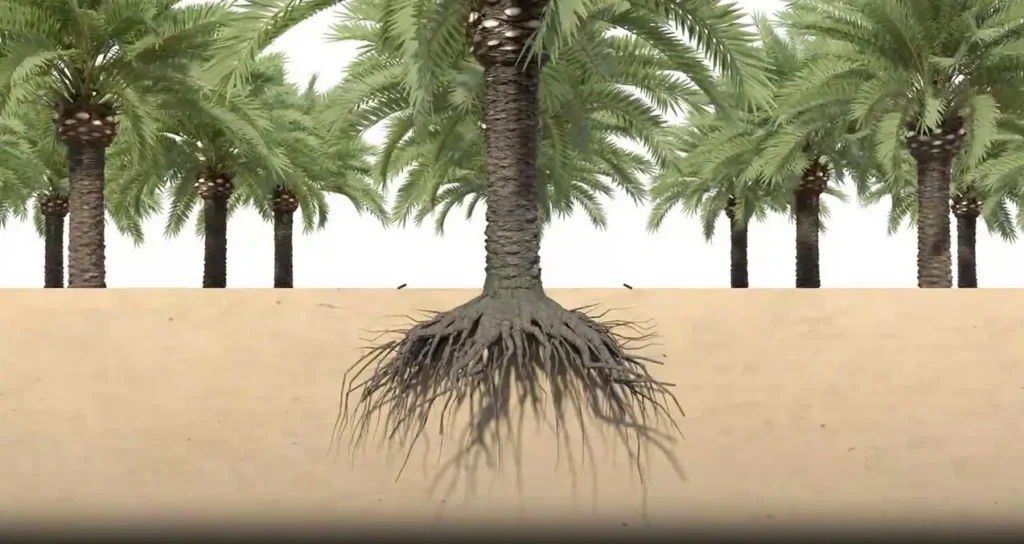
Encourages root growth
Minimises evaporation
Can utilise existing pipework
A highly efficient and sustainable system for water storage and with controllable plant irrigation
Hydrorock natural aquifer irrigation systems have been proven to deliver higher crop yields, and conserve water.
That’s because we work with you to design a system that suits local ground conditions, crop and yield requirements – whether your project is a new installation or a retrofit project using existing pipework infrastructure.
What’s more, they enable you to bring uncultivated land into productive use.
- Better crop yield
- Optimal plant health
- Very high hydraulic conductivity (Ks) of around 750 cm/d
- Improves root strength
- Reduces inputs such as labour, water, fertiliser and maintenance
- Raises land value
- Facilitates use of uncultivated land
- Phased installation possible
- Enables efficient delivery of fertiliser and nutrients
- Works with existing pipework
- Straightforward installation
Design Detailing
Potential configurations
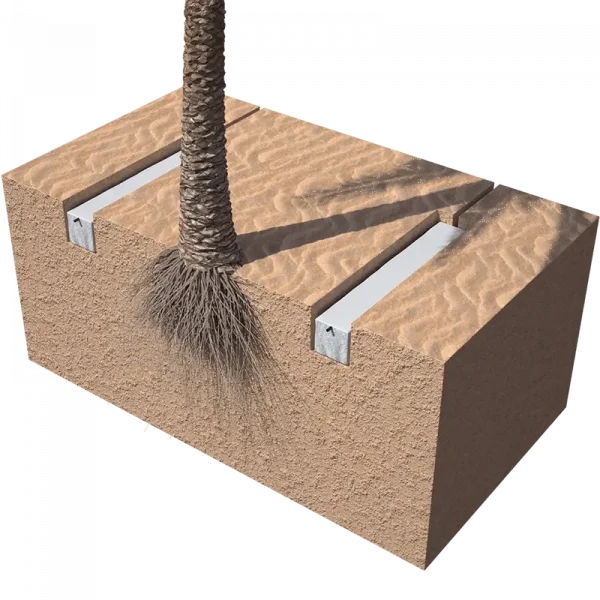
- Systems can be configured to meet project needs.
- Recommended for the subsurface irrigation of orchards and other fruit bearing trees.
- Suitable for use as a completely new irrigation system or individual elements can be connected to the existing irrigation system (plug & play).
- Block size and volume will vary by project, to account for crop type, water needs and the existing irrigation system’s capacity.
- Blocks can be installed in line with or parallel to the pipe network, according to the site needs.
- The number of elements per tree can be calculated according to the site irrigation requirements.
- As a minimum, the amount and size of blocks per tree should enough to irrigate for one day during the peak season.
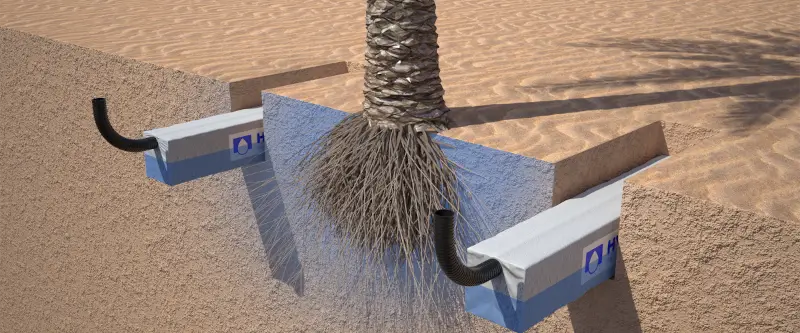
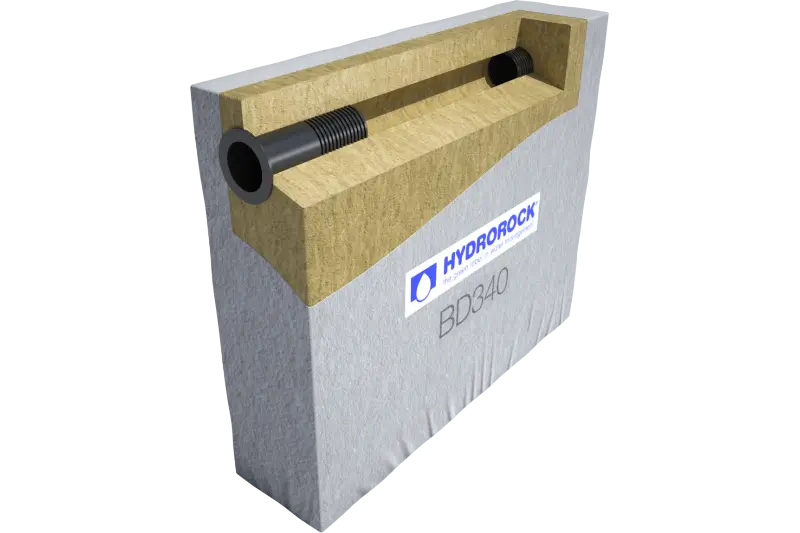
- Note: blocks are sealed, with only one lateral side and the top of the block open. When placed underground, the unsealed lateral side should be positioned against or near the tree roots.
- The pipe can be attached in two ways:
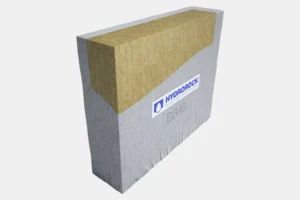
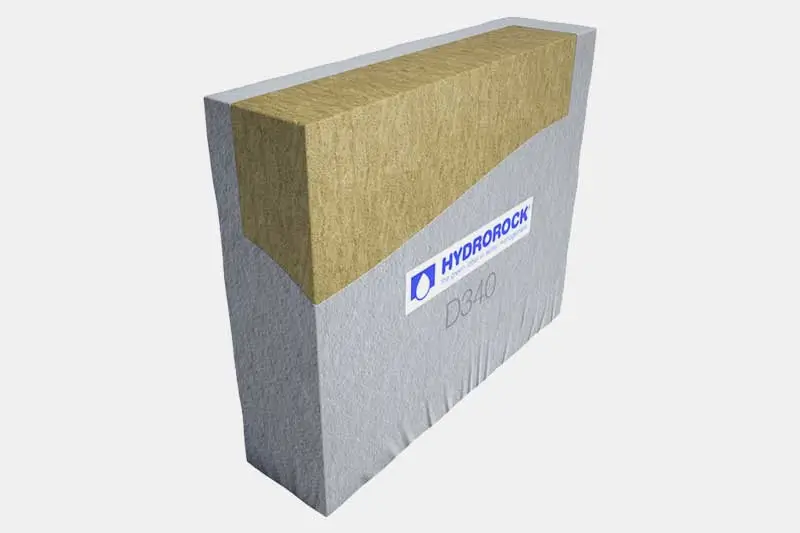
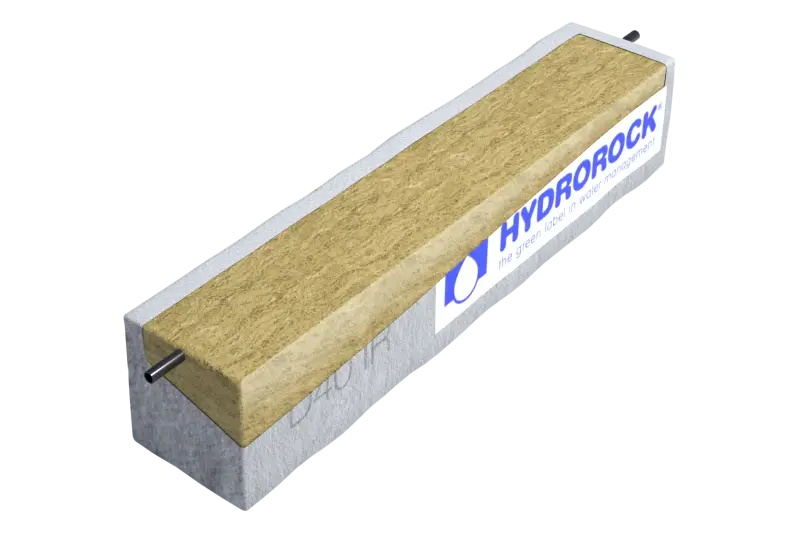
- Inserting the water line’s open end into the top of the block between the stone wool and geotextile. Recommended for D20, D40, D45 blocks and parallel setups.
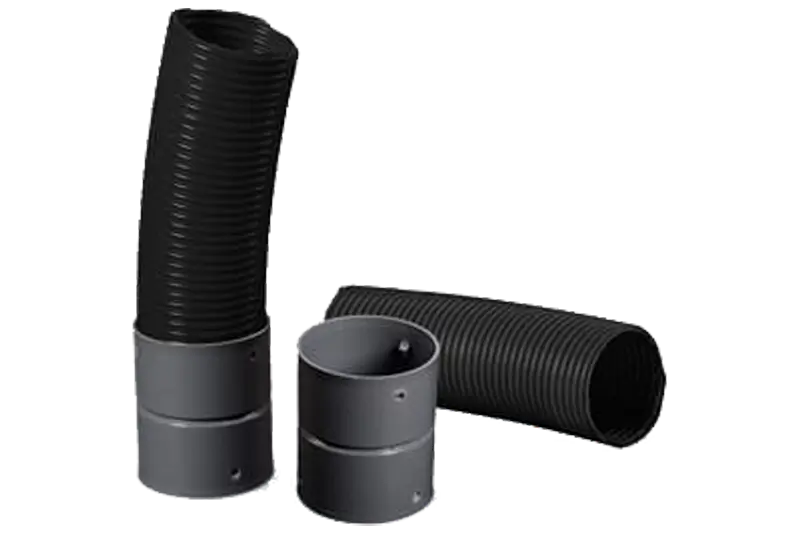
- Connecting the blocks through a 50 mm non-perforated pipe, by attaching the pipes to the integrated perforated drainage pipe inside the blocks. This is mainly recommended for BD112 blocks and for an “in line” configuration.
Resources
Downloads
Hydrorock Highway Filter Drains
Calculator
Click here to visit our partner Hydrorock’s calculator to quickly assess the number and volume of Hydrorock natural aquifer blocks that will be required for your application.
Products
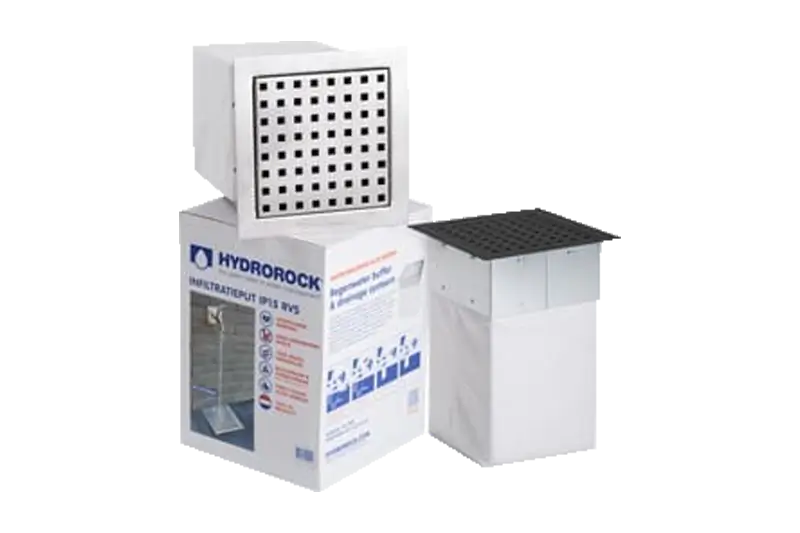
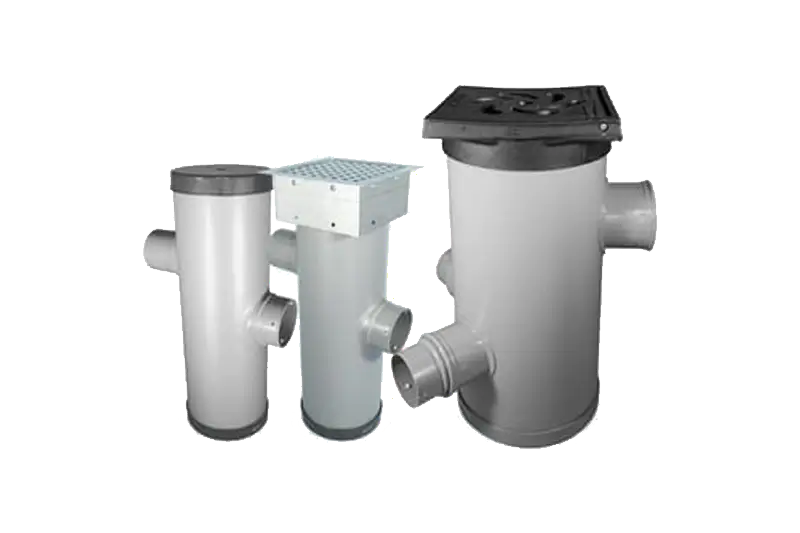
Our natural aquifer blocks are available to provide 100% sustainable, 100% recyclable water management solutions.
Installation
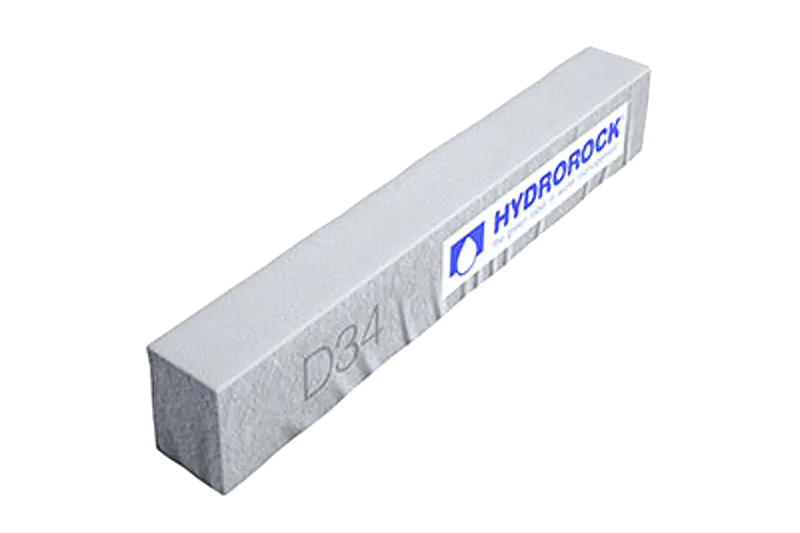
Installation is very simple and quick with minimal disruption. Blocks are pre-wrapped with filter membrane, so the excavation needs to be only as large as the system (no access is required to fit the membrane).
- No specialist installation engineering or equipment is needed, with simple snap-together fittings.
- Blocks are typically laid in a module three blocks wide. This enables the system to self-vent, and should the filters be compromised by human error, the entire system can be flushed.
- Perforated pipes that are integrated within the BD blocks allow rapid water inflow and storage in each block, underground.
- Extra capacity can be added quicky and easily with the installation of further blocks.
- Unlike crated sumps, Hydrorock systems offer the flexibility to be fitted around existing infrastructure, such as pipes and cable, for total site optimisation.
- Laying the system on a 100mm layer of sand will enable infiltration from the module into the surrounding soil, allowing the water to slowly flow from the aquifer blocks.
Take a look at our recent case studies
Case Study: Supporting Essex Council’s Climate Resilience Strategy
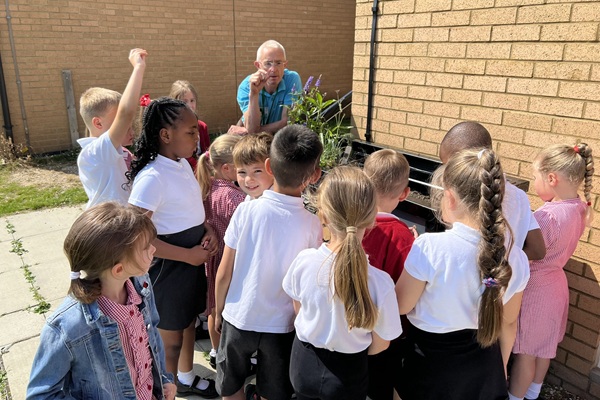
To address surface water flooding in school environments, Essex County Council funded the installation of…
Case Study: Tandridge Council
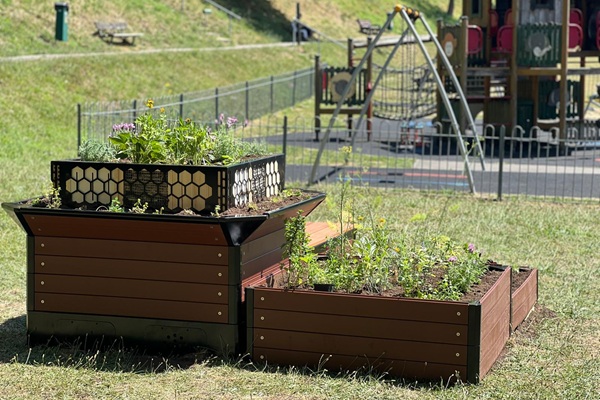
To support Tandridge Council's biodiversity and nature recovery goals, BioScapes delivered seven BioCubes for public…
Case Study: Northamptonshire Council
The Northants RAIN Project turned to BioScapes to deliver 32 Sustainable Drainage & BNG Planters…
Case Study: Ashlands Primary, Ilkley
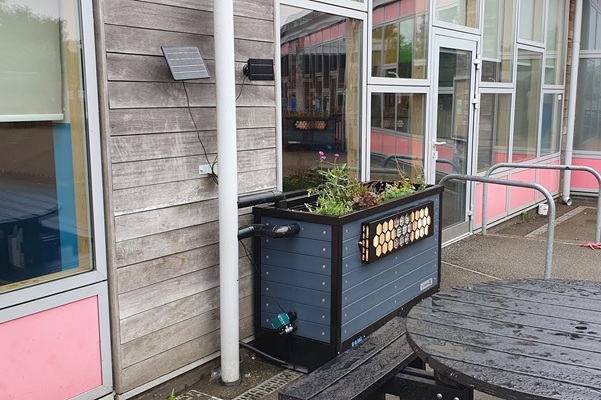
Yorkshire Water and Groundwork Yorkshire collaborated with BioScapes to provide Ashlands Primary School in West…

Case Study: Hornsea School & Language College
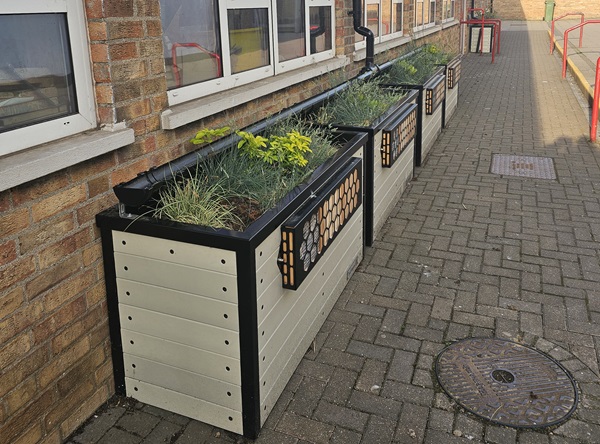
Hornsea School partnered with Wold Construction and East Riding Council to install six BioScapes SuDS…
Design your Hydrorock system today
Our configurator can assist you in creating the system required for your project.